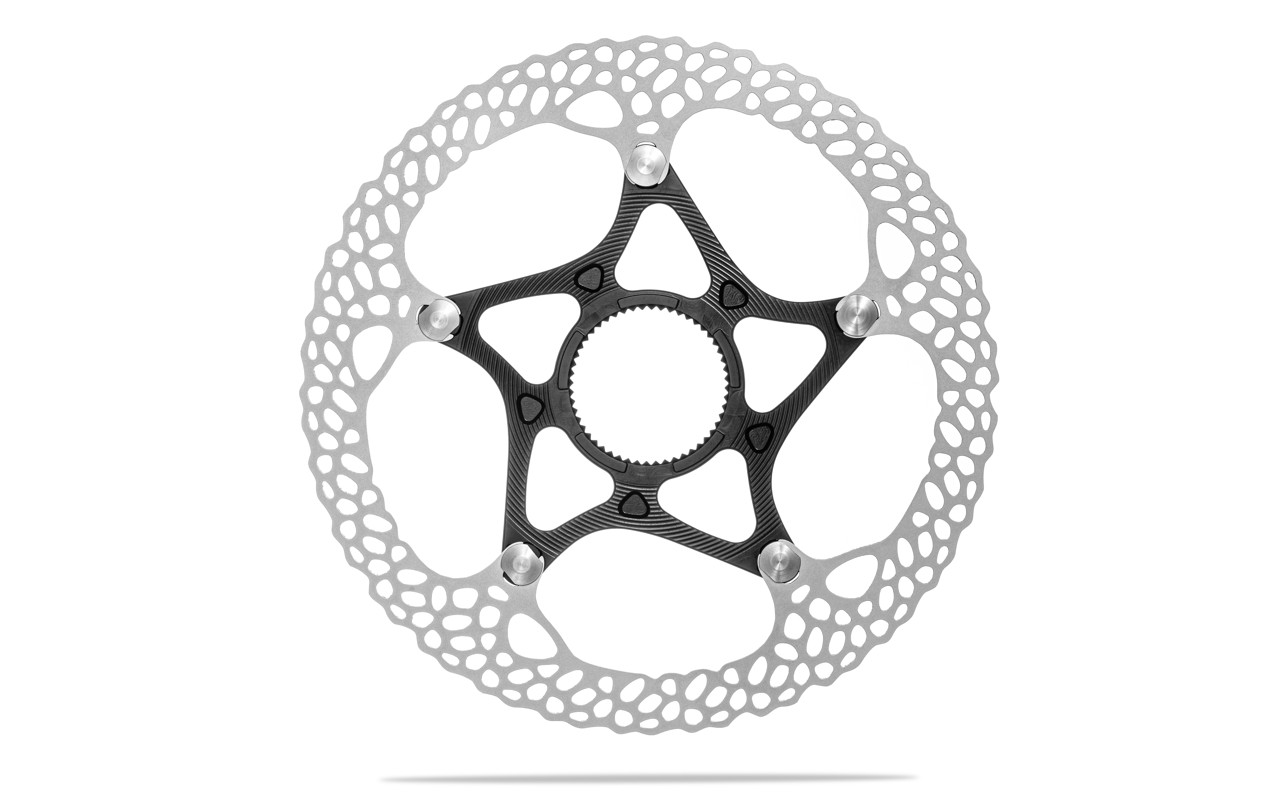
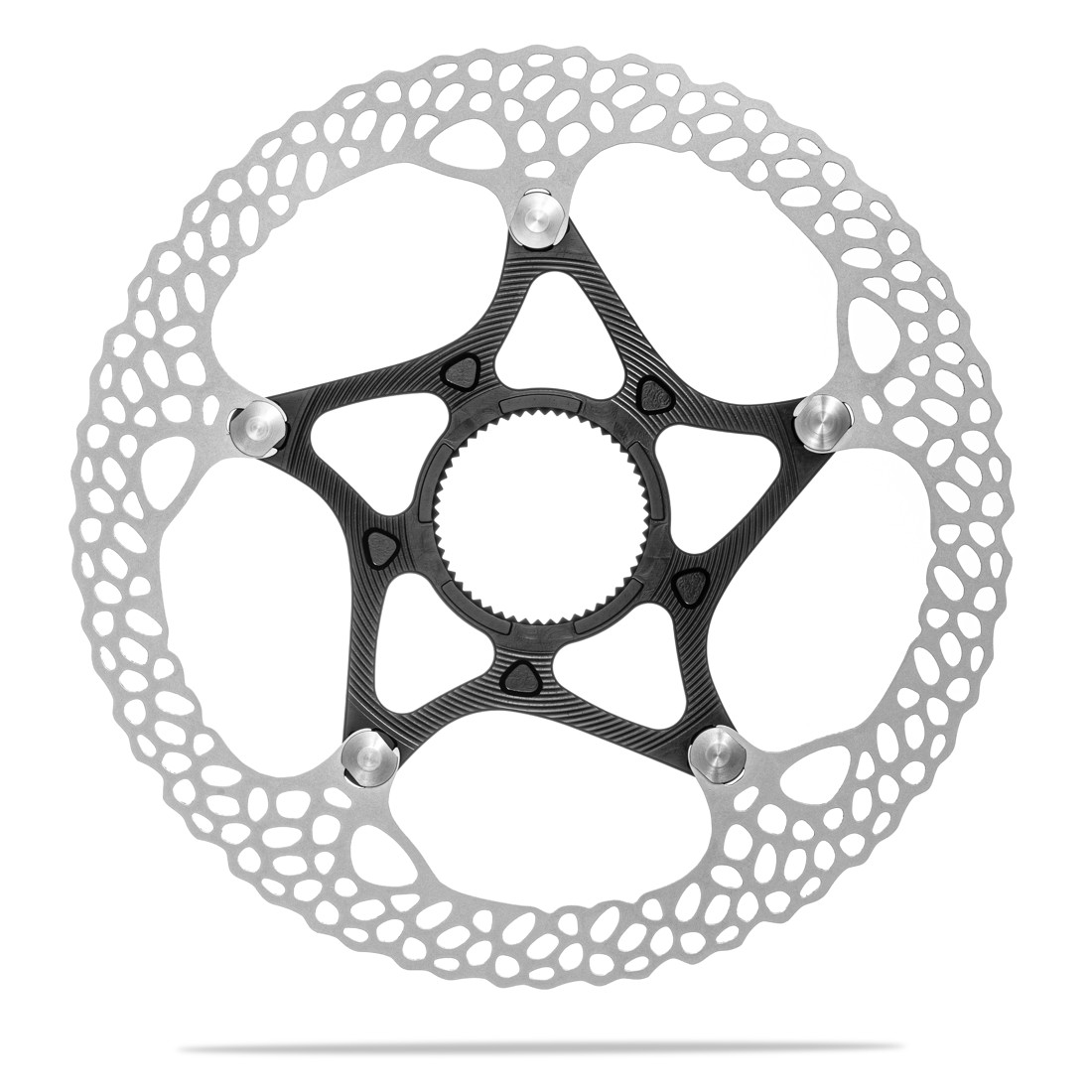
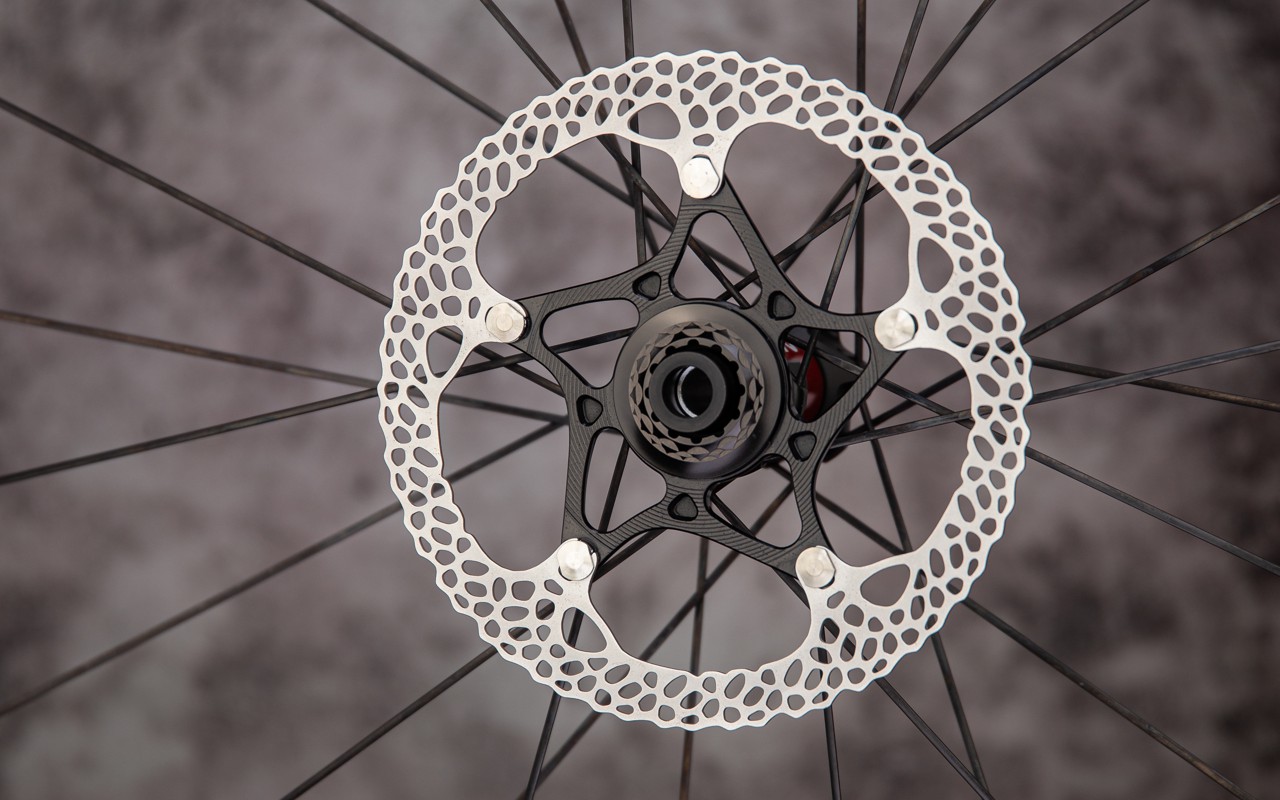
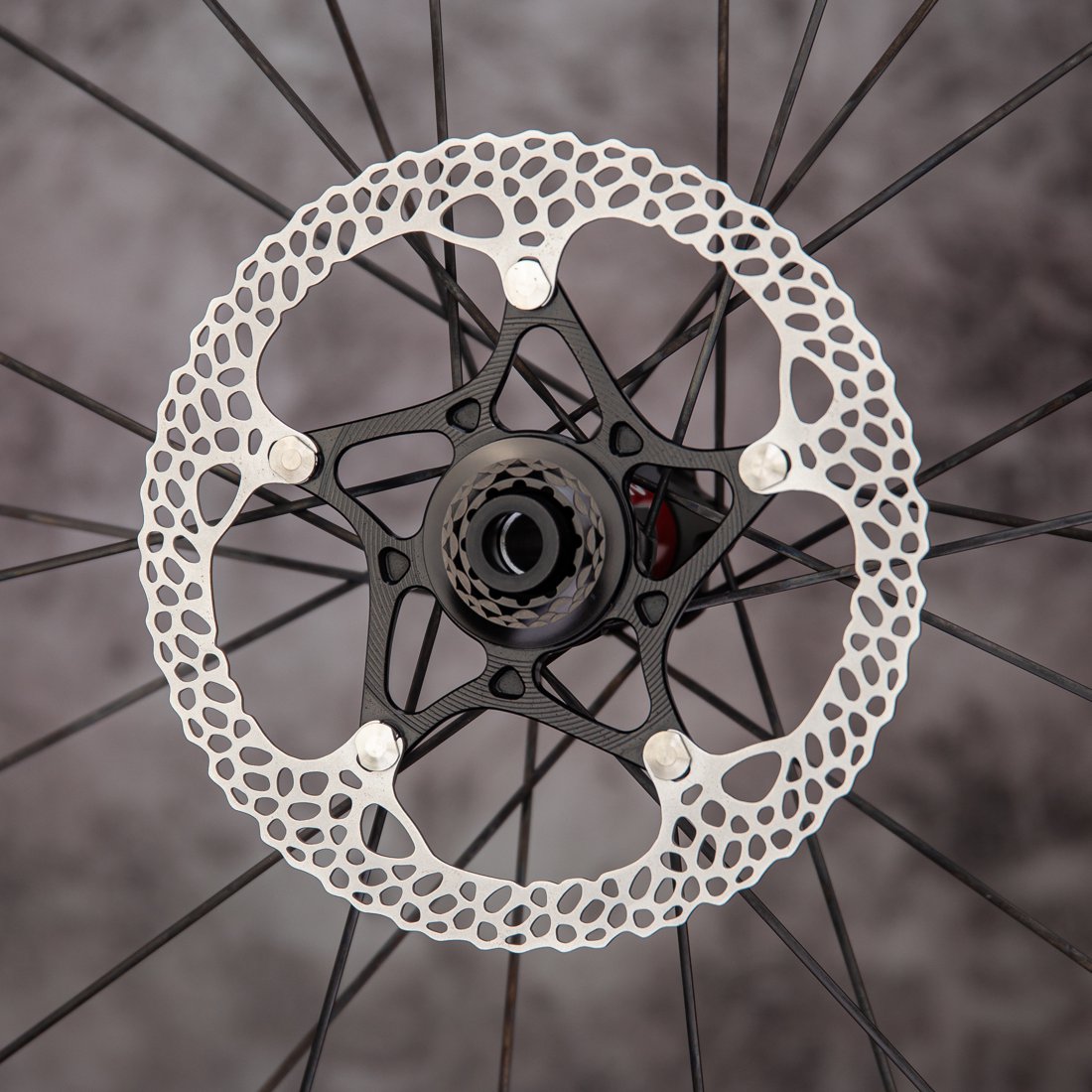
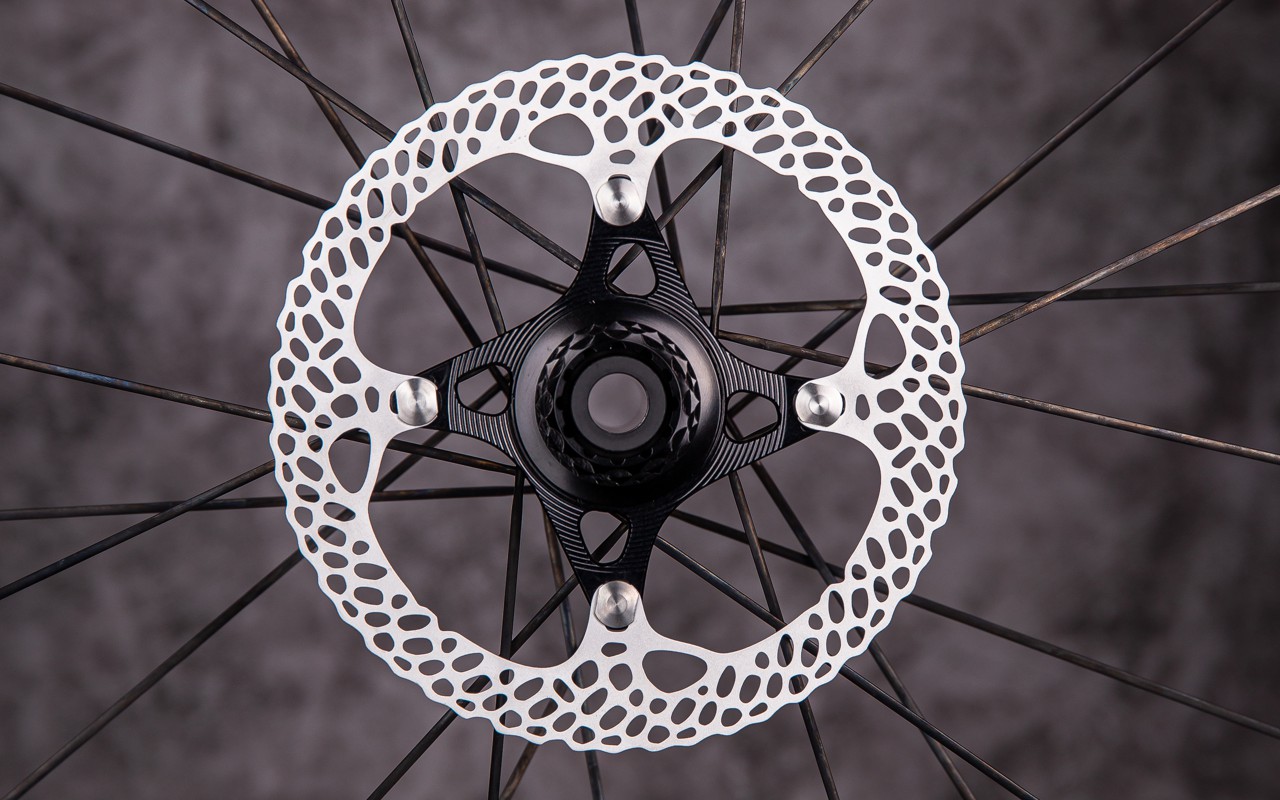
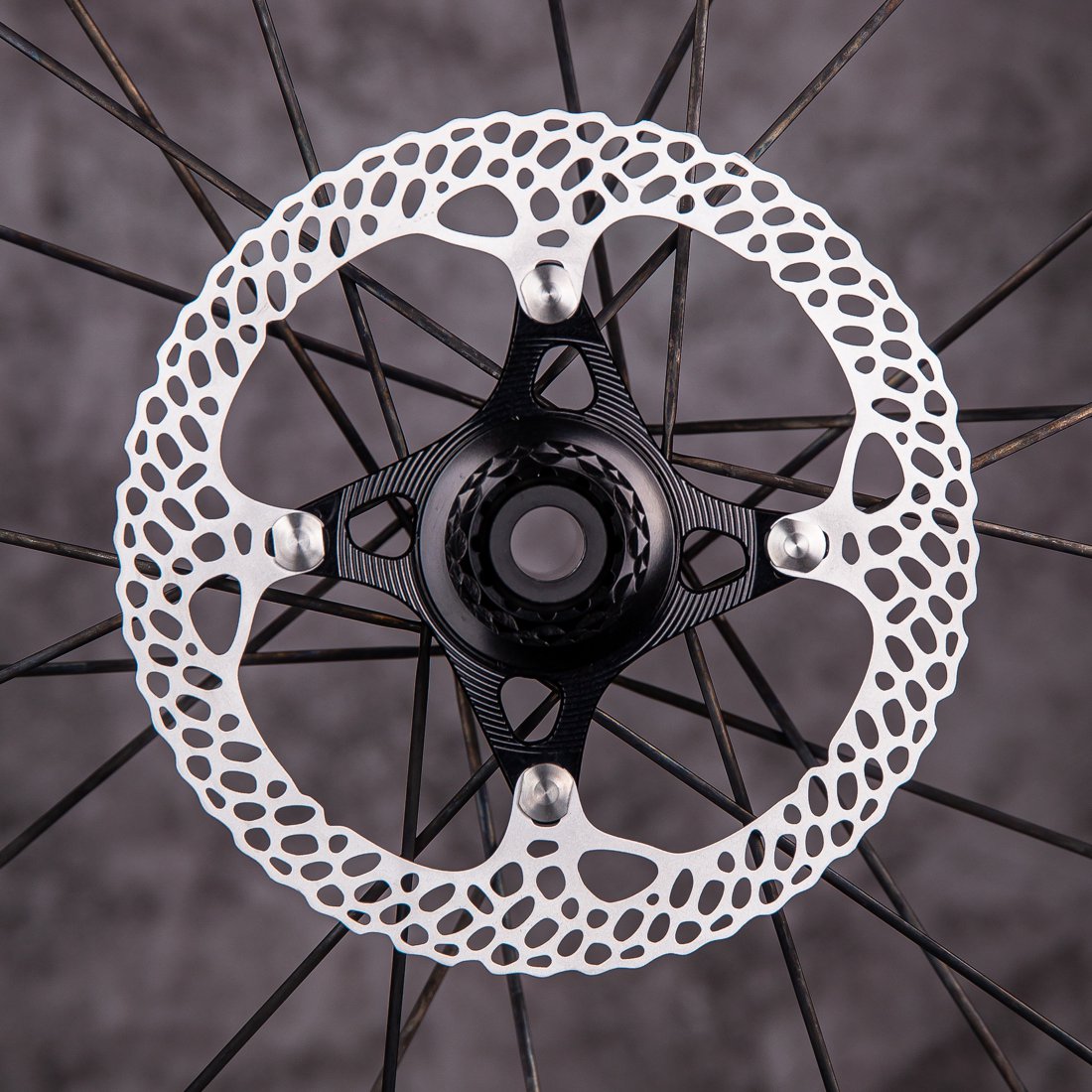
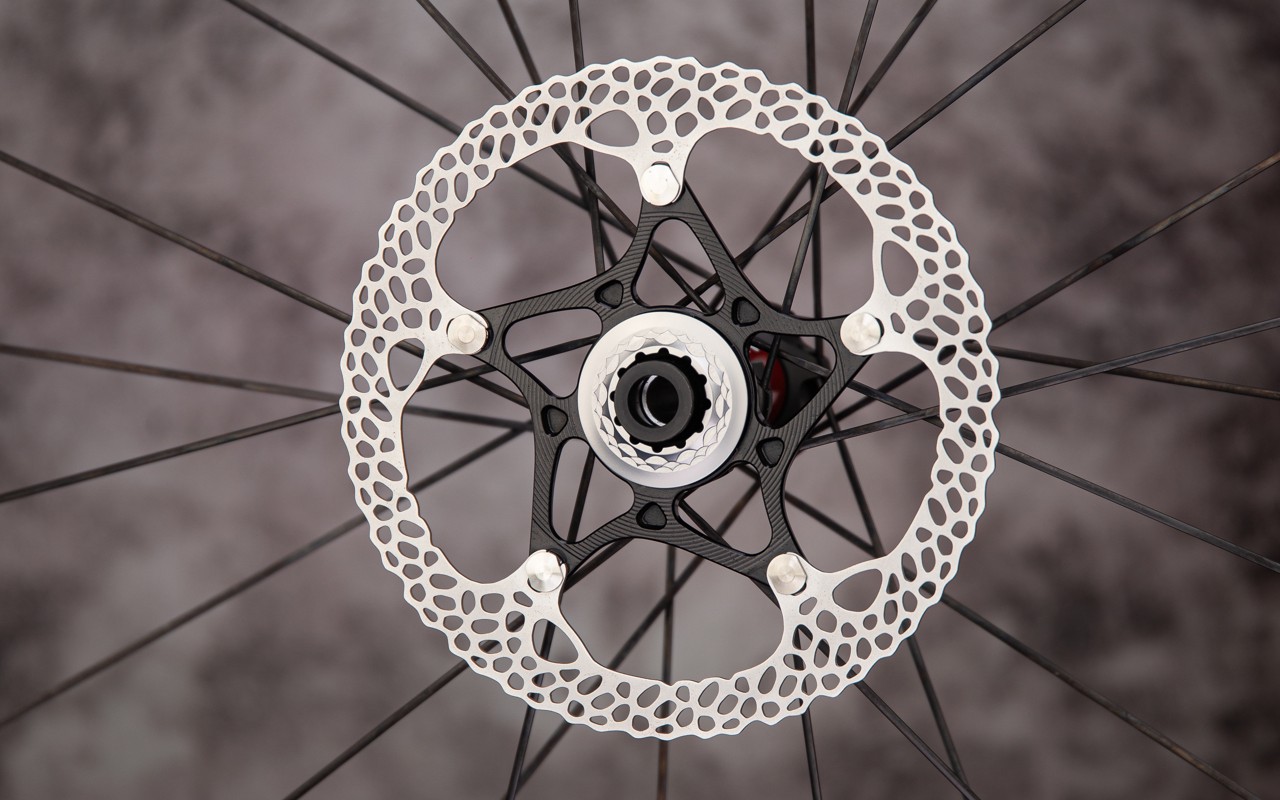
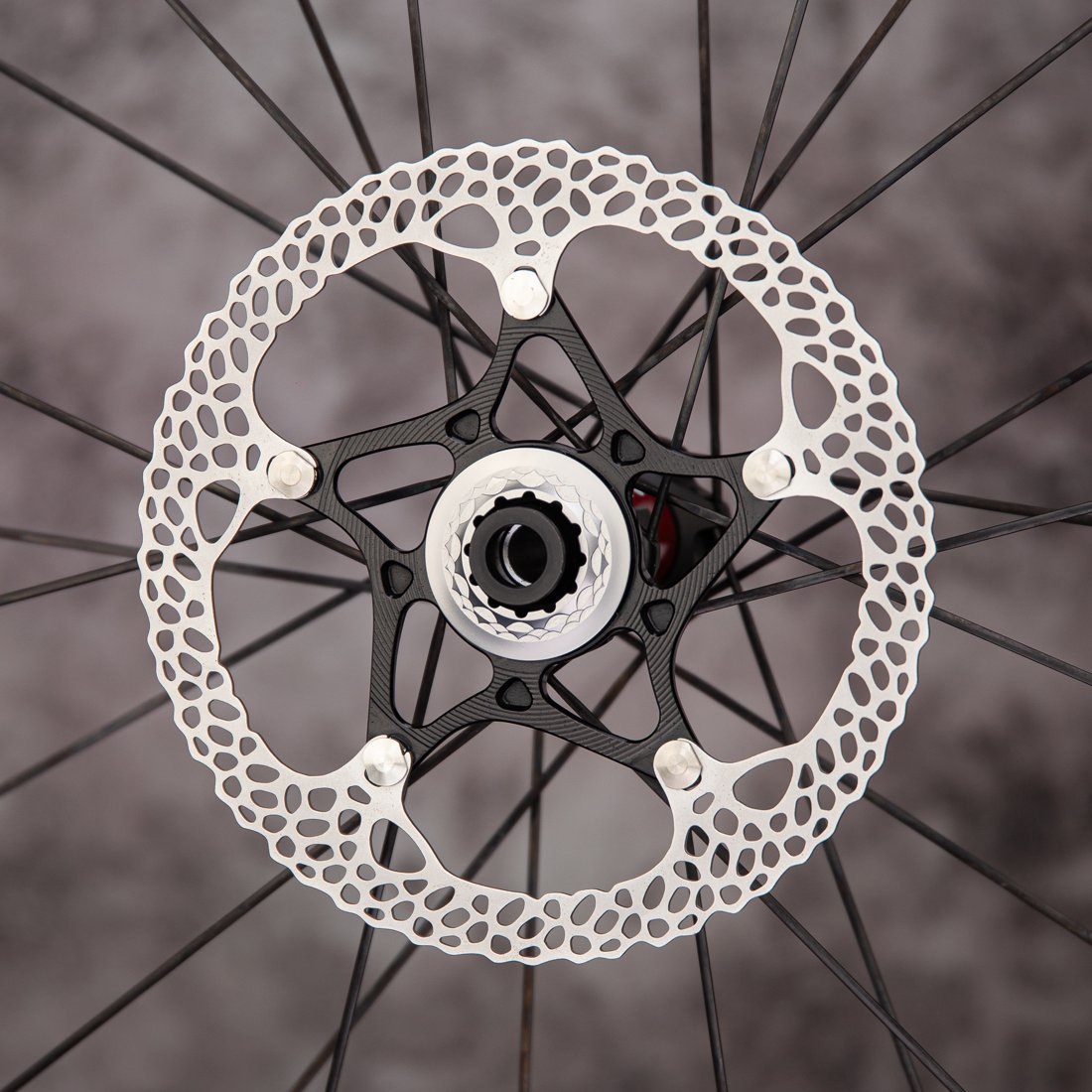
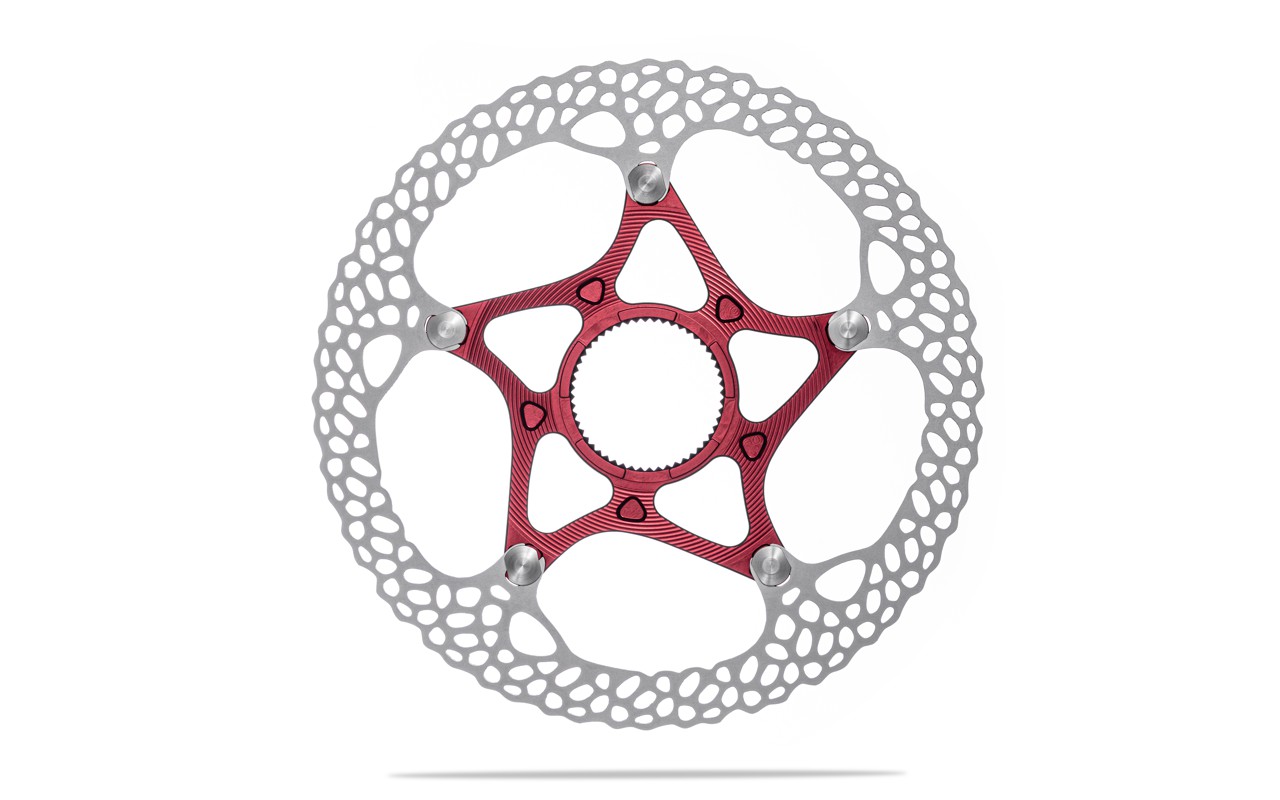
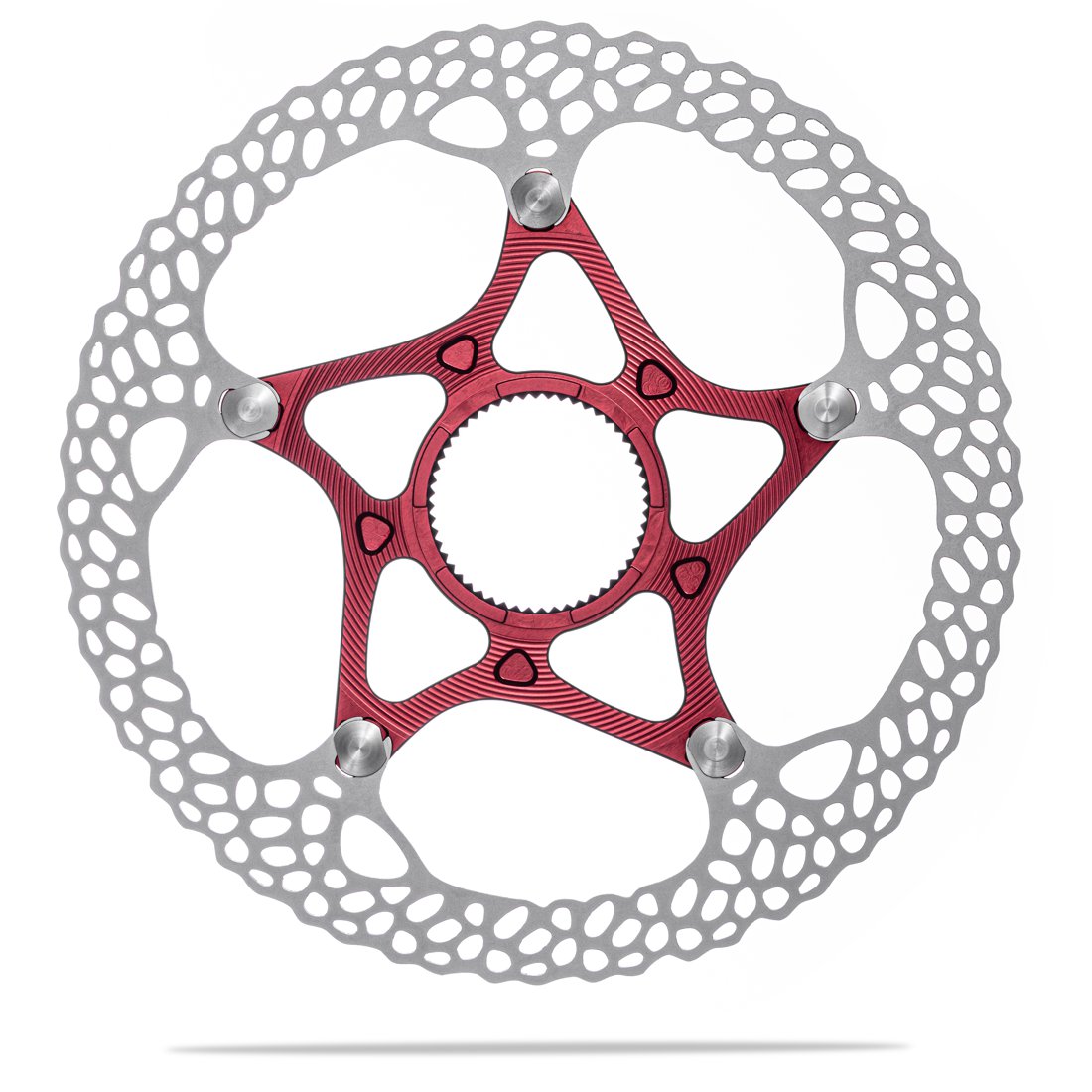
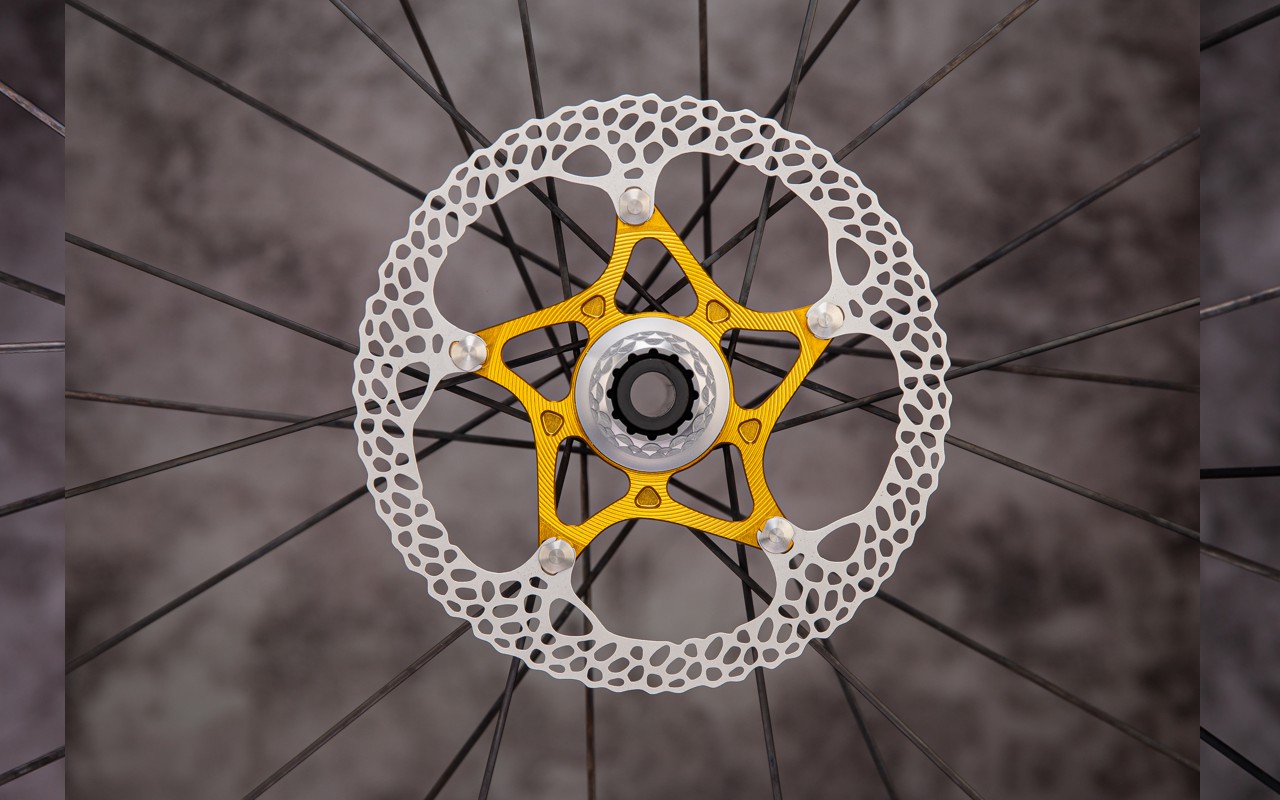
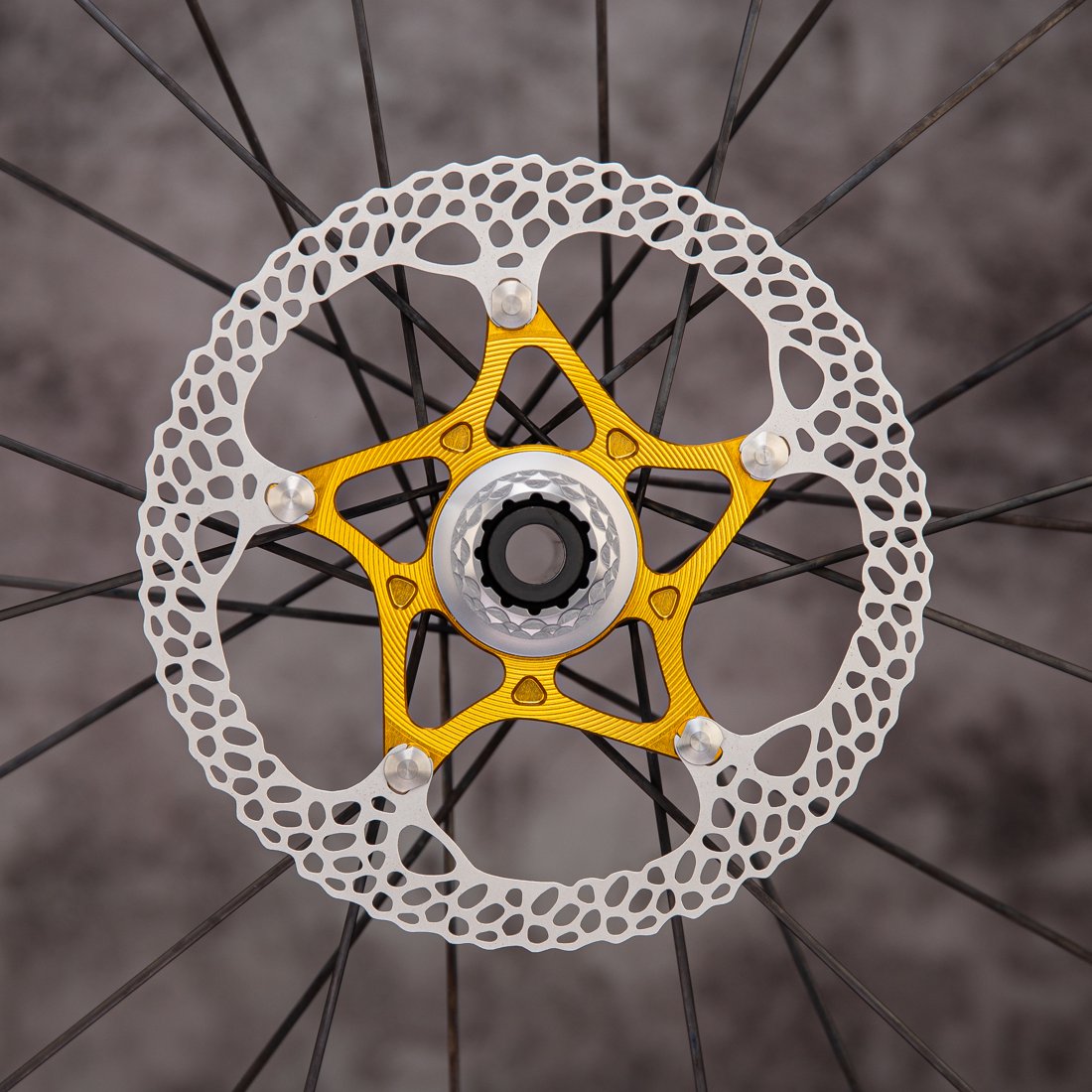
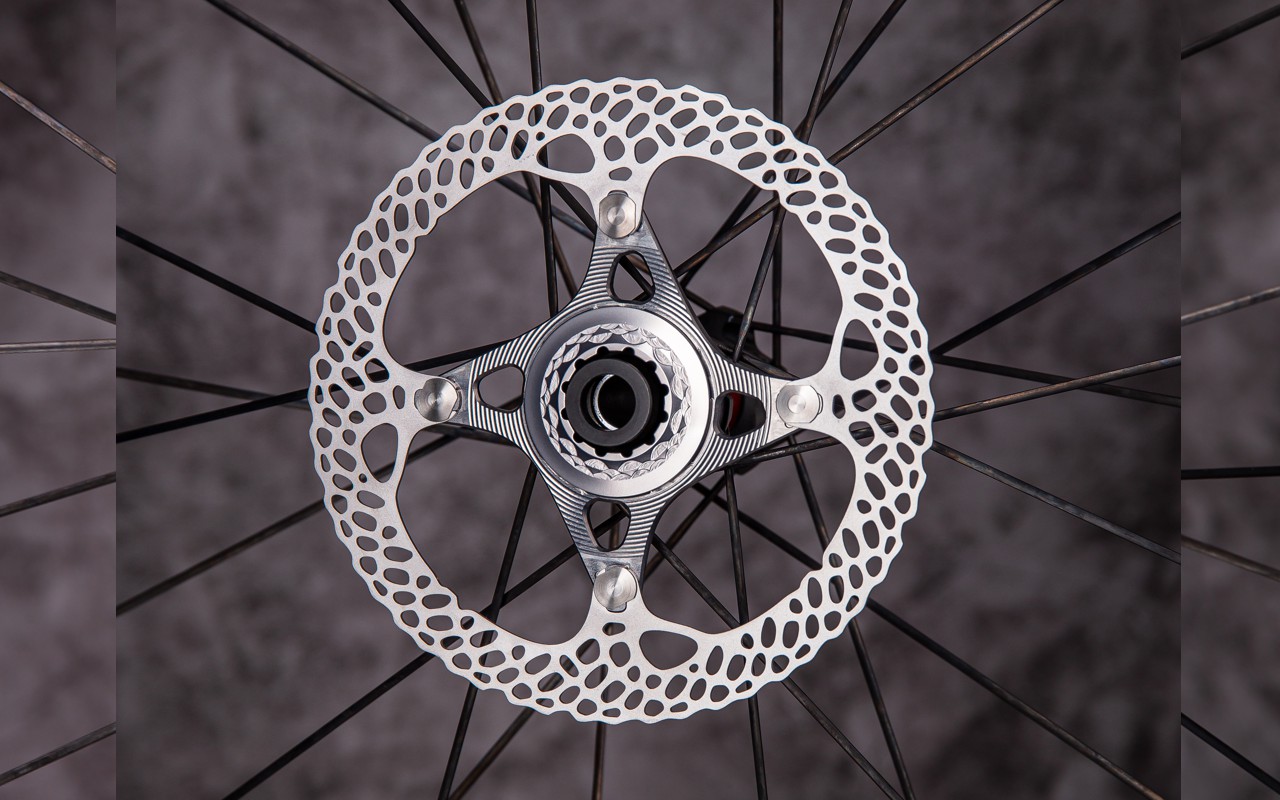
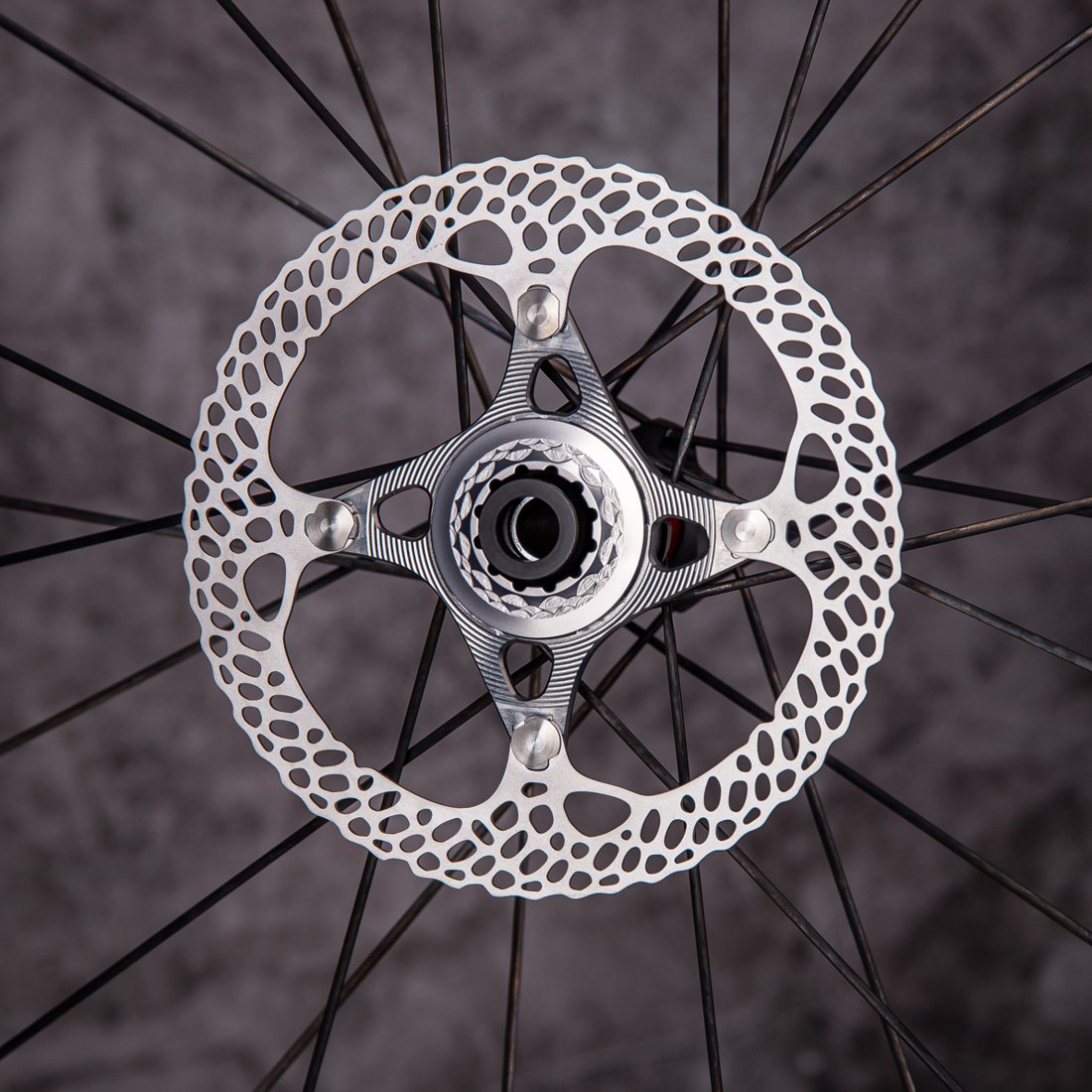
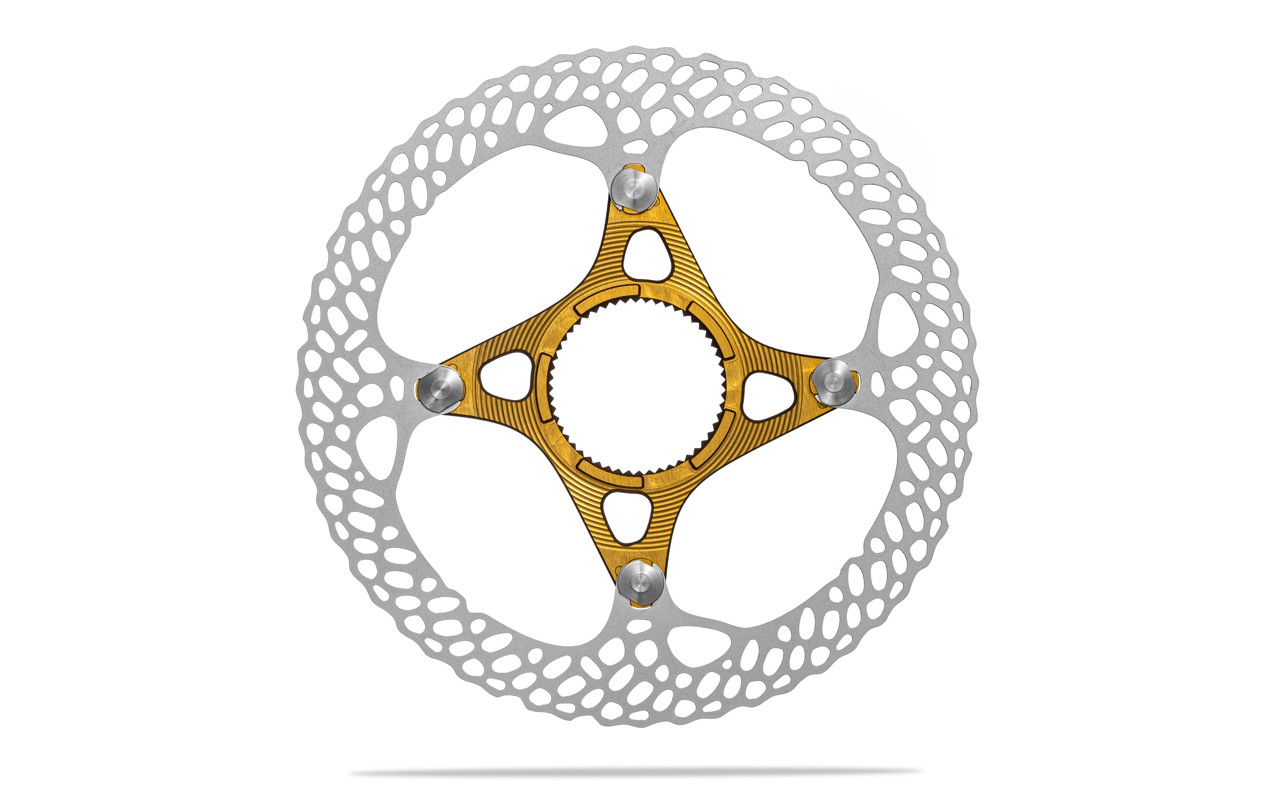
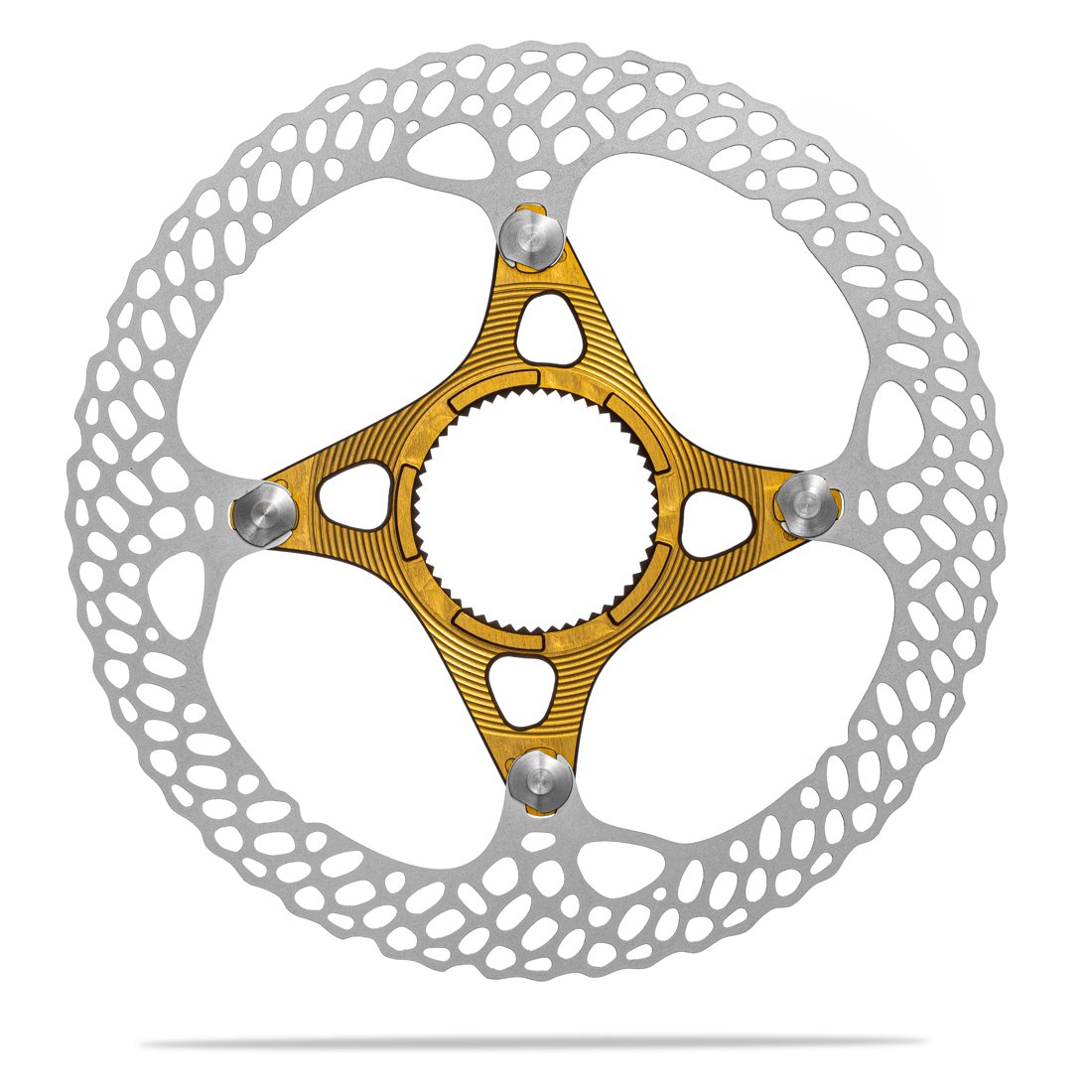
RAVEN™ SL Centerlock Disc Rotor
Made in Small Batches.
Thanks for your rating.
Do you like this product? Share it with your friends!
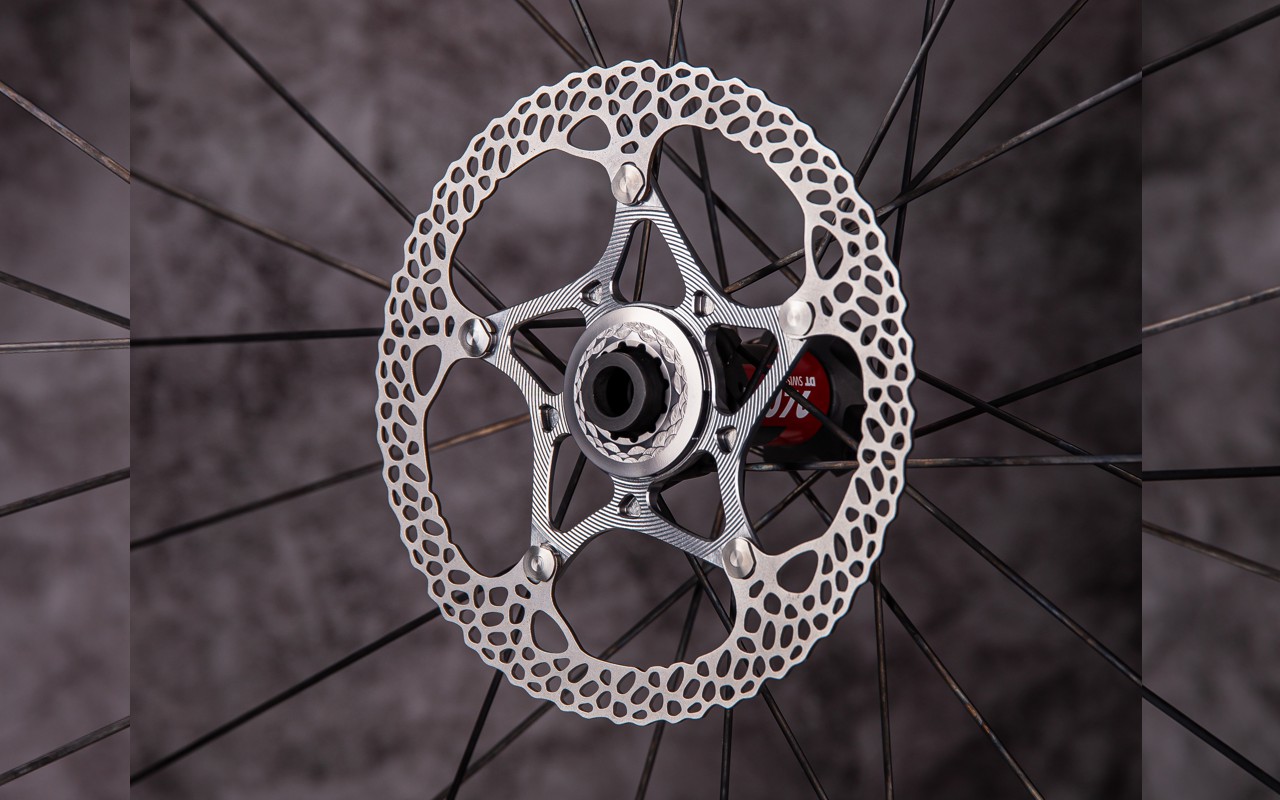
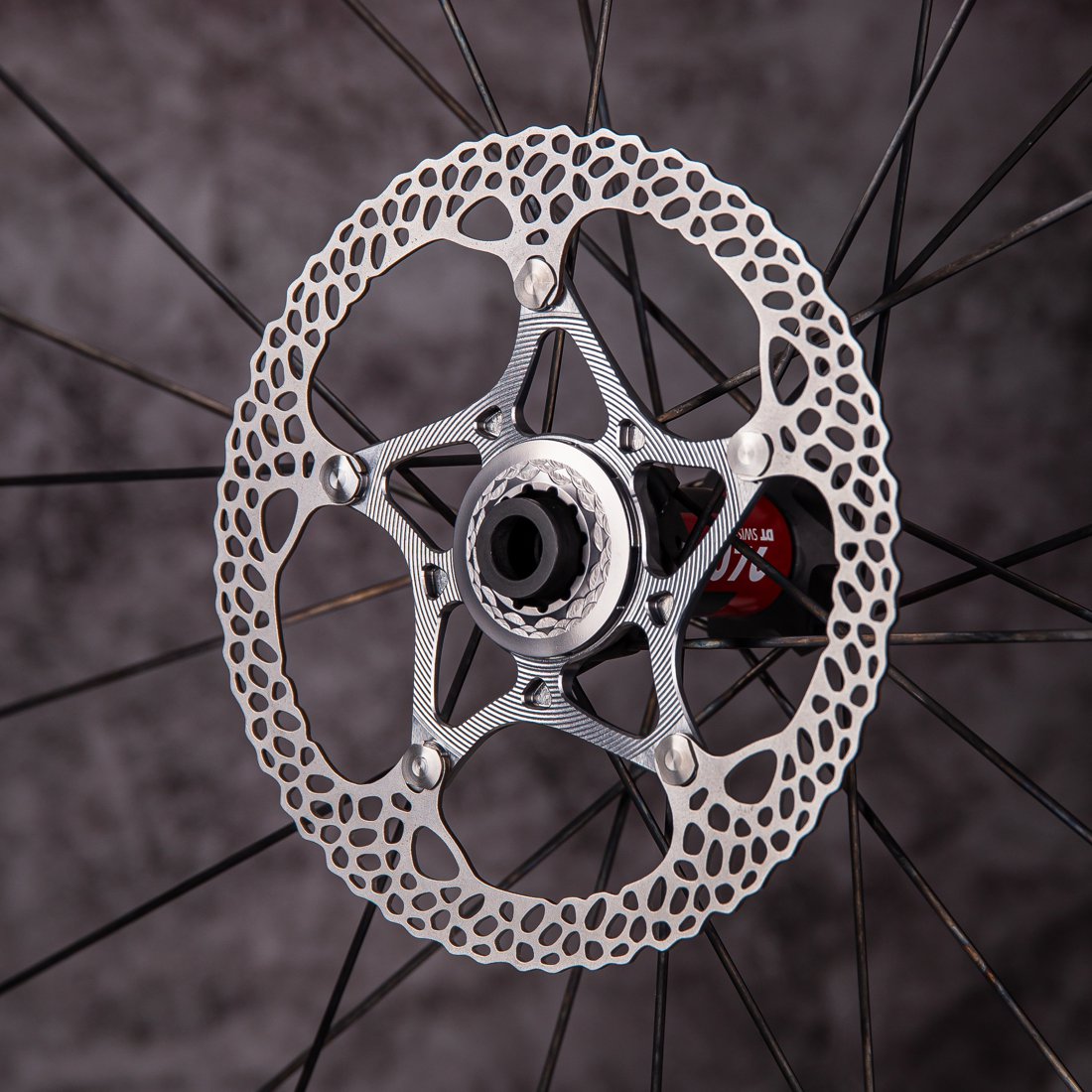
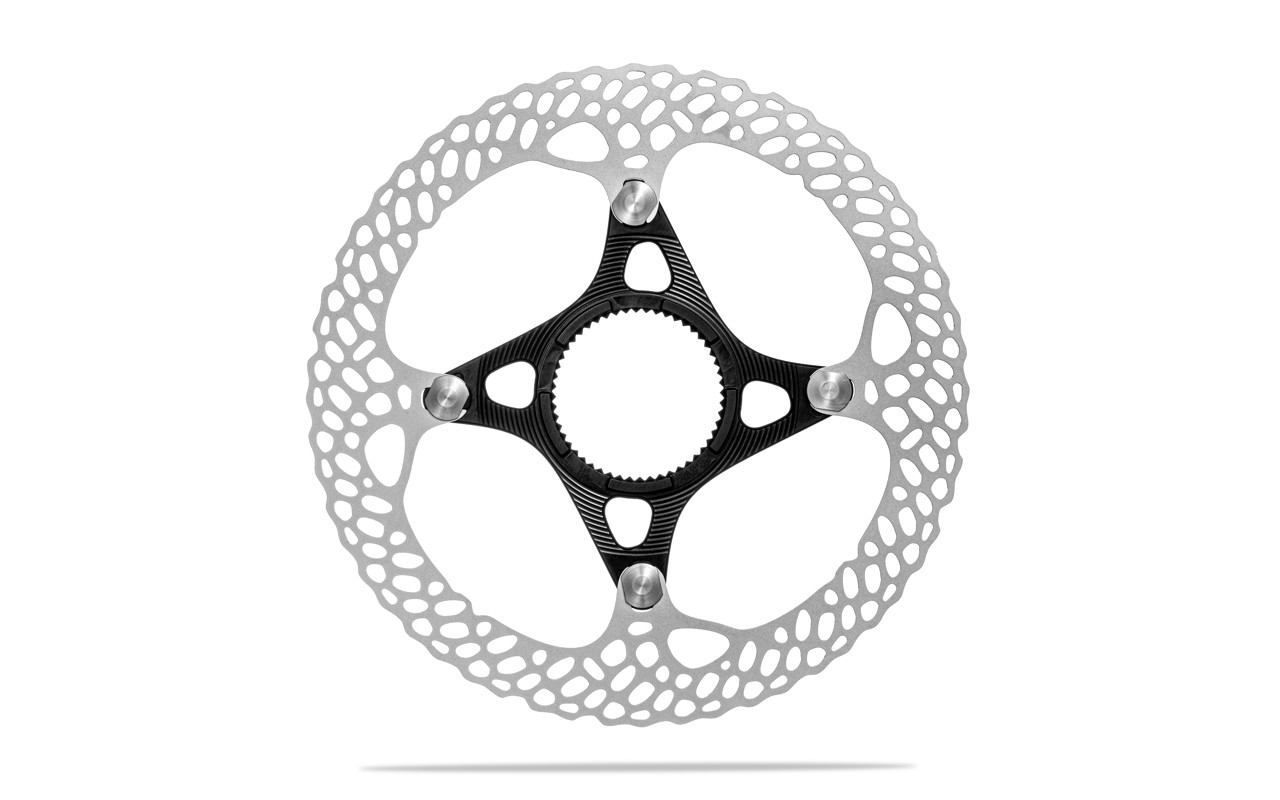
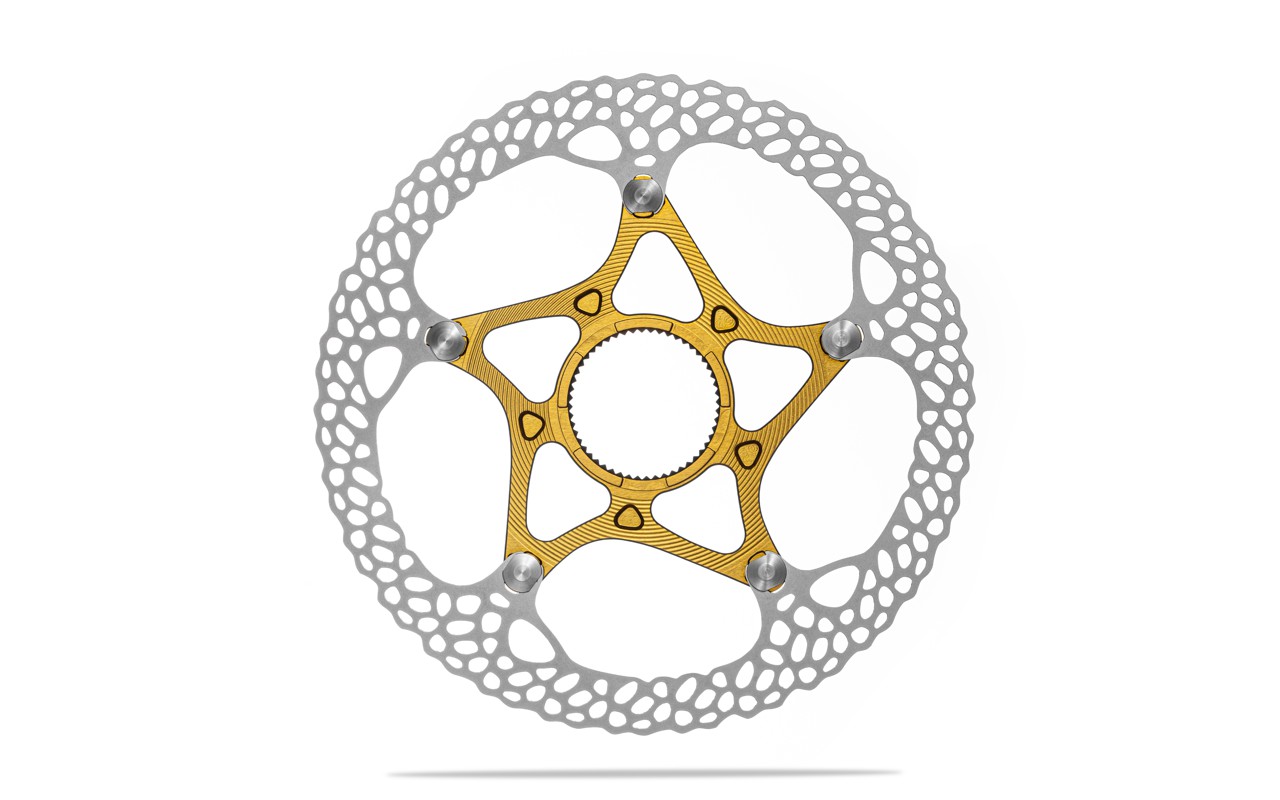
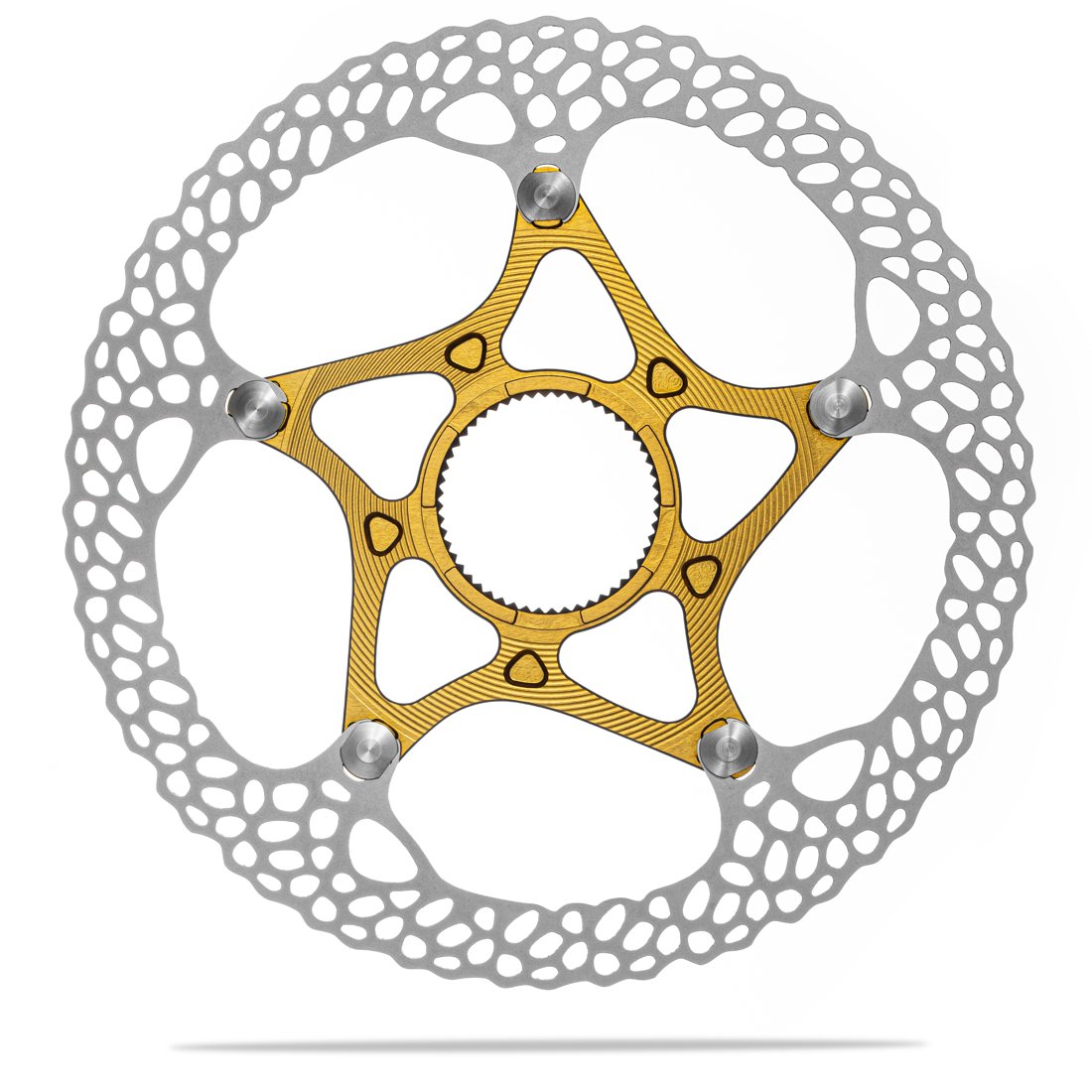
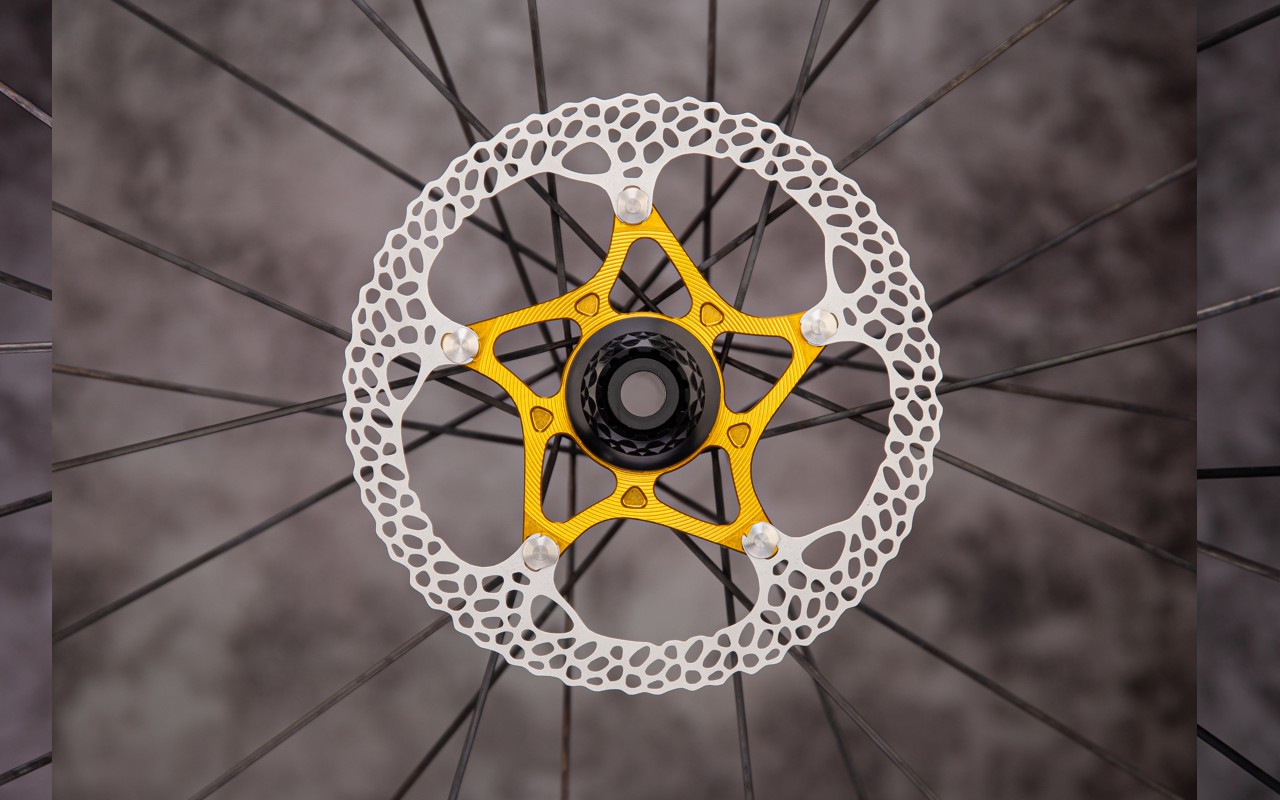
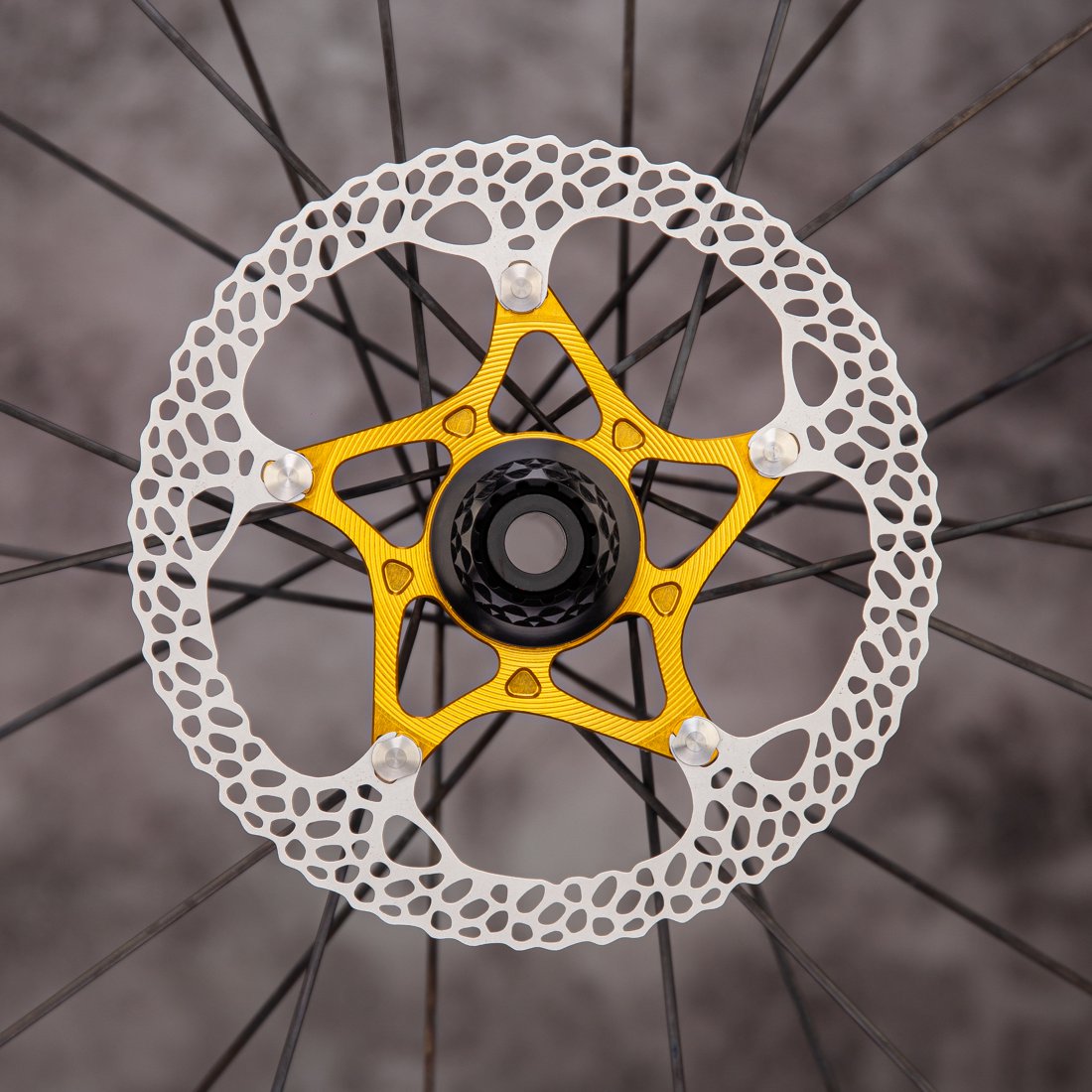
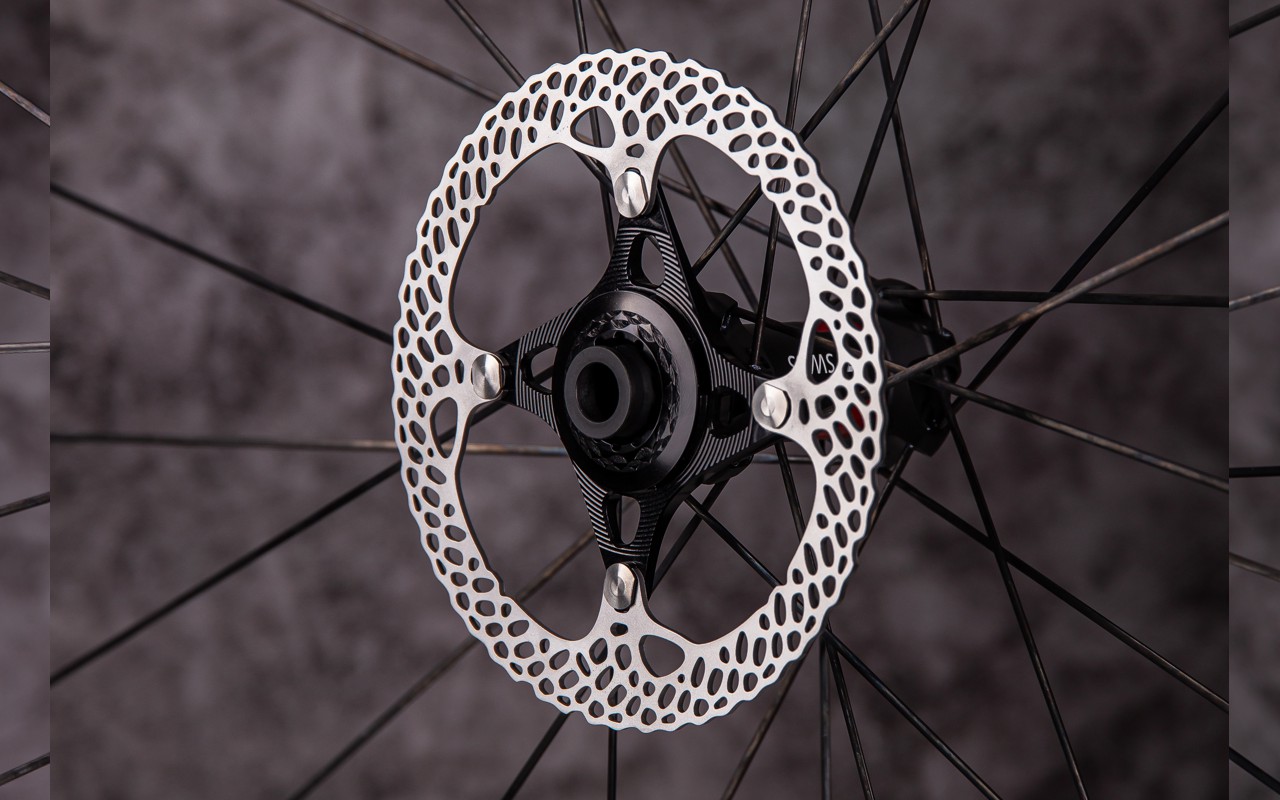
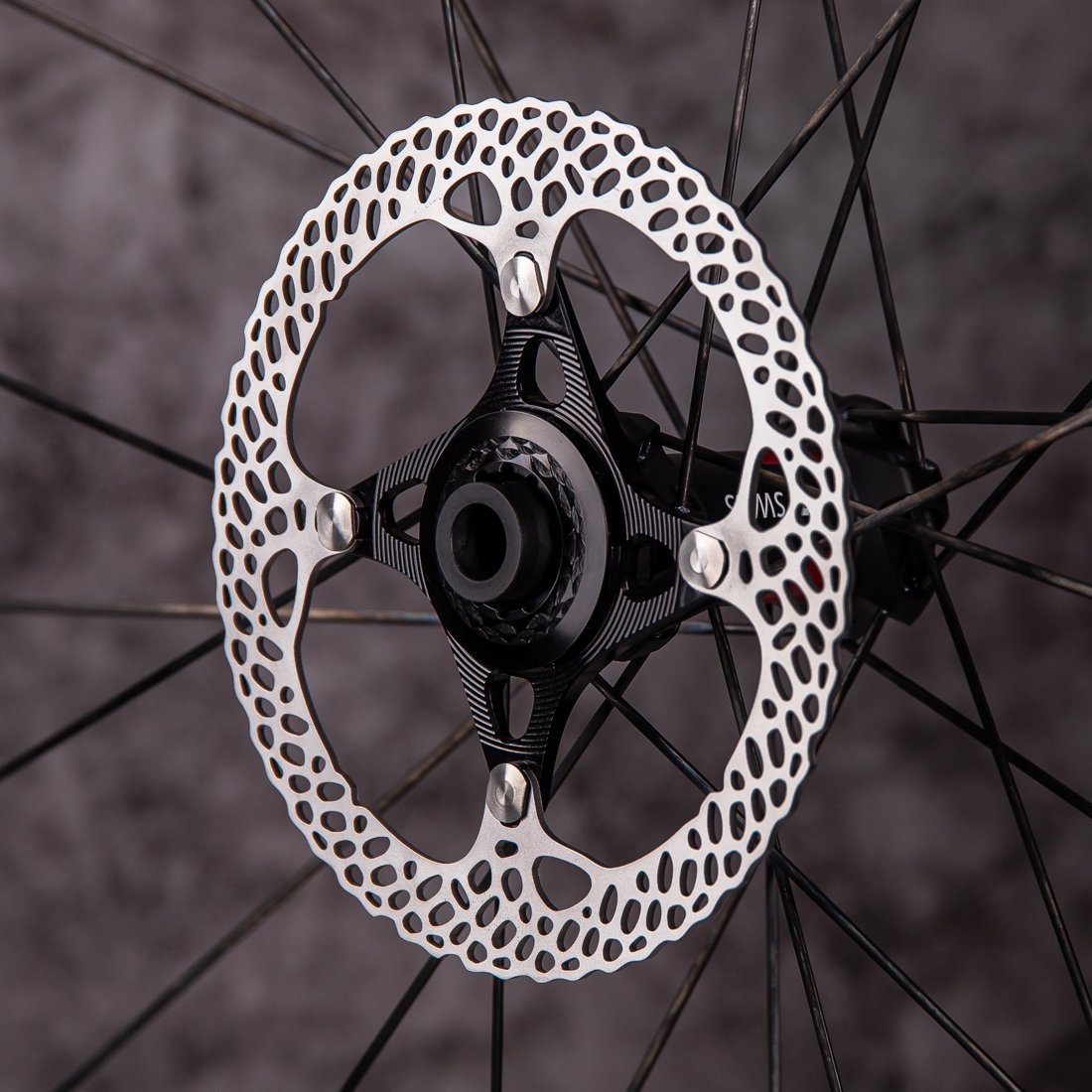
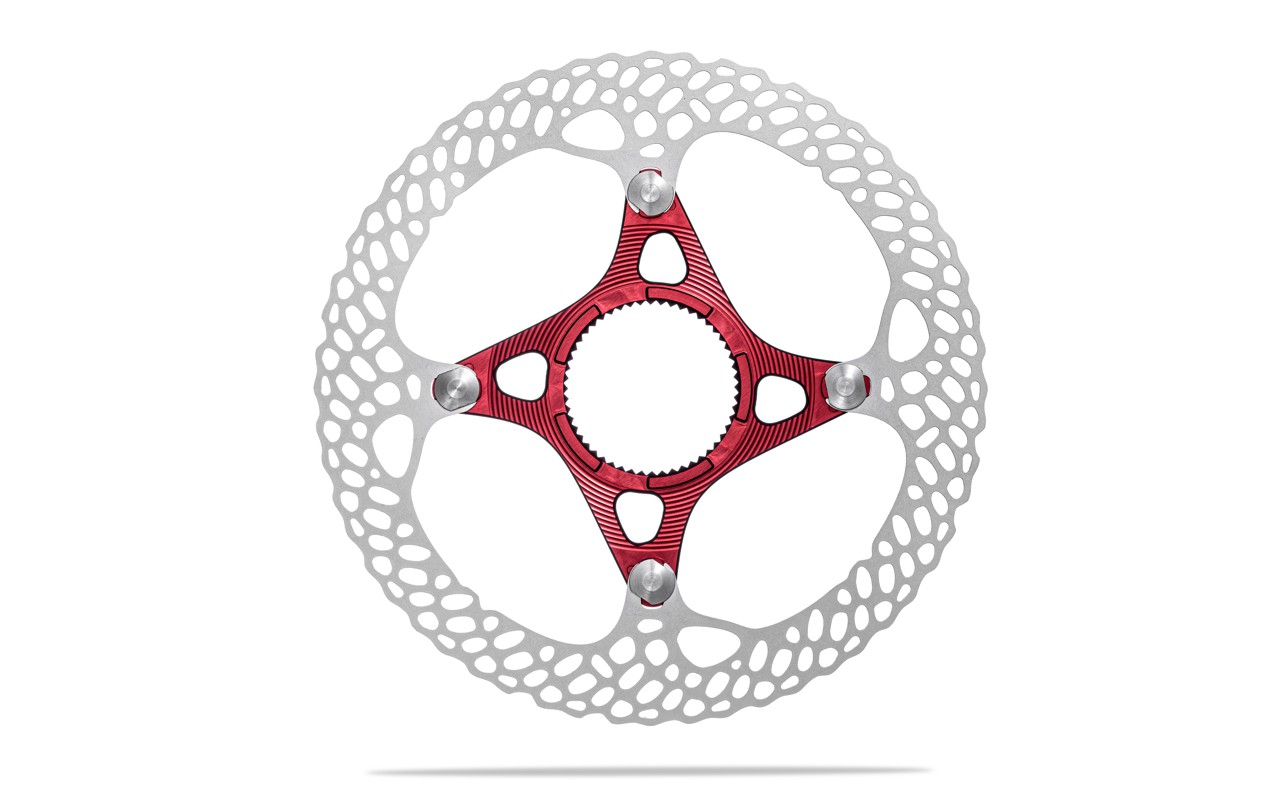
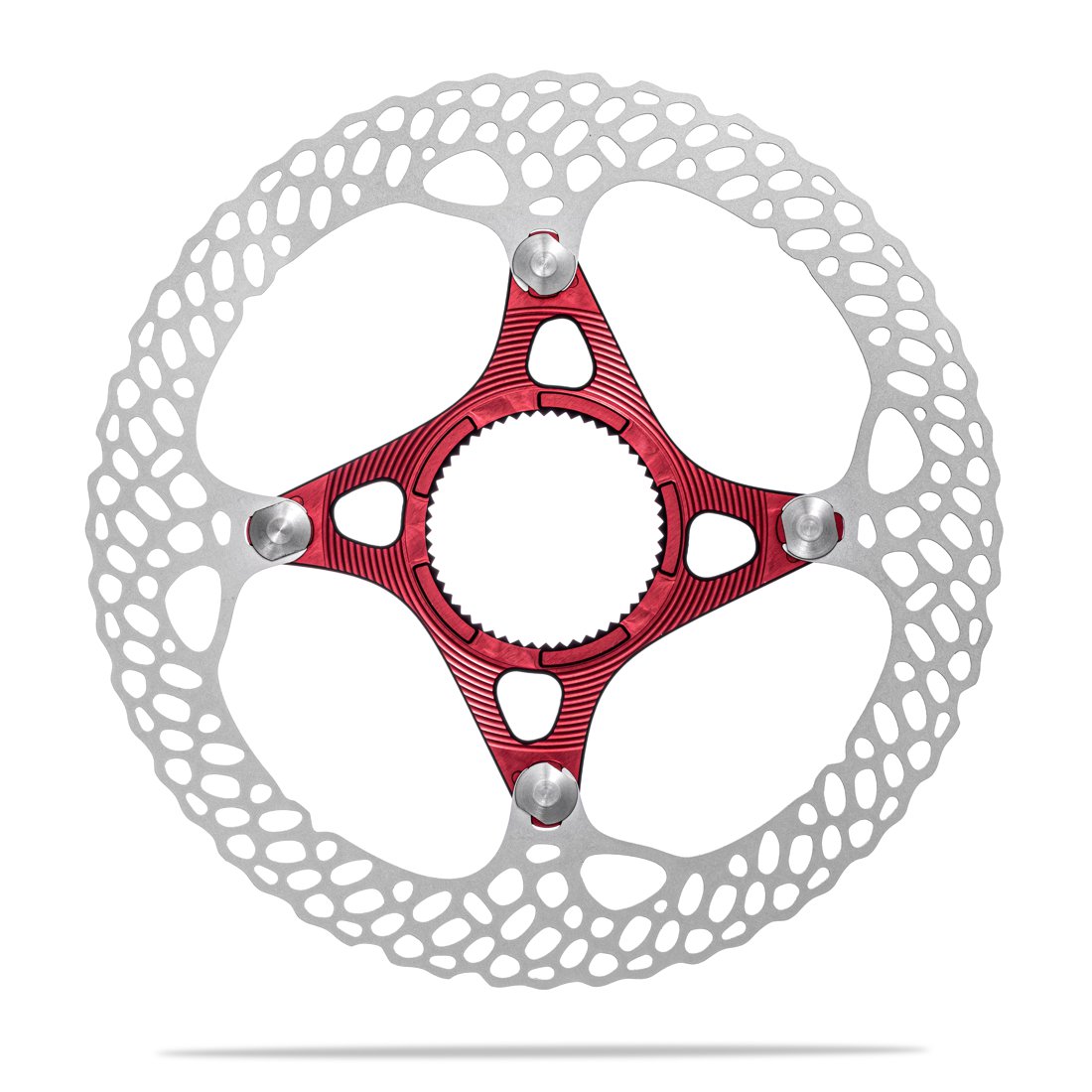
Ultimate lightweight performance. For riders who prioritise minimum weight without sacrificing serious braking capability. RAVEN SL Centerlock uses a mathematically calculated friction track to distribute braking material more evenly across the rotor, reducing localised overheating and helping maintain consistent braking performance. Full-floating construction manages thermal expansion, while the carefully optimised perforation pattern brings the 160 mm Center Lock version down to just 94g. RAVEN controls where the steel remains, not simply how much is removed.
The problem hiding in rotor holes
Making a light brake rotor is relatively easy. The friction track represents a significant proportion of its mass, so cutting more and larger holes quickly reduces weight. But remove material in the wrong places and braking performance can deteriorate dramatically, particularly as temperature rises.
Every hole removes not only weight, but also part of the braking surface and material available to absorb and dissipate heat. The important factor, however, is not simply how much steel remains in the rotor - it is how evenly that available braking material is distributed across the height of the friction track.
A brake pad applies pressure across the entire track. If one narrow circumferential path contains substantially less steel than the paths immediately beside it, that area has less material available to absorb and dissipate the heat generated through friction. It therefore becomes thermally overloaded relative to its neighbours.
As temperature increases, the corresponding area of the brake pad can overheat too. With organic friction materials, excessive temperature can cause glazing and a substantial reduction in friction. Part of the rotor and pad surface effectively contributes less braking force just when more braking is being demanded. The rider applies greater lever force, generating still more heat and accelerating the problem.
This helps explain why two rotors of the same diameter and similar overall mass can behave very differently under hard or prolonged braking.
Years of rotor testing and the later development of GRAPHENpads helped absoluteBLACK identify the connection between hole geometry, available braking material, localised temperature and braking performance. The same thermally overloaded areas also tended to wear faster, eventually becoming visible as the familiar concentric grooves found on many used rotors.
The grooves weren't the problem. They were a map of the problem.
RAVEN was developed around this discovery. Instead of treating the perforations simply as a way to reduce weight or create airflow, every hole is positioned to control how much braking material remains at each radial position across the friction track.
The result is a completely different approach to rotor design: RAVEN controls where the steel remains, not simply how much is removed. Find out more below.
|
Mass (+/-1g) : |
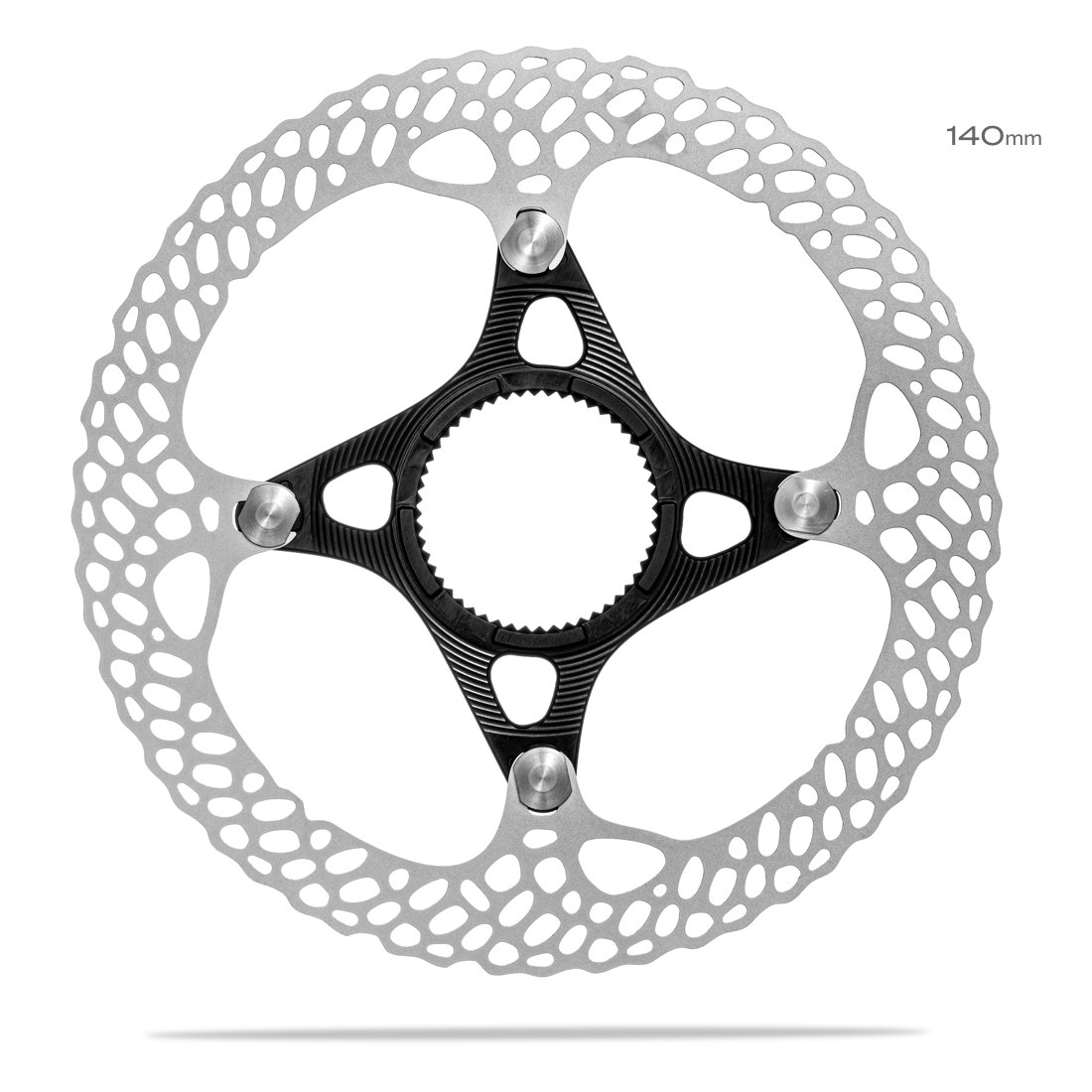
140mm / 81g , 160mm / 94g |
|
Color |
Black, Titanium, Gold, Red |
|
Compatibility |
All Centerlock hubs |
|
Materials: |
Aluminium 7075, Stainless steel, Titanium |
|
Permissible usage: |
Road / Gravel . 140mm rotor can only be used by rider + bike combined weight below 82kg / 180lbs. The 160mm rotor should only be used up to 109kg / 240lbs combined weight. Above limit? Use 180mm rotors. |
|
In the box: |
1x Rotor, 1x alcohol swab (for cleaning friction surface after rotor installation) |
Why every hole has a purpose
To understand RAVEN, forget the overall appearance of the rotor for a moment and consider what the brake pad actually sees. Imagine drawing hundreds of virtual circles through the friction track, progressively increasing in diameter from its inner to outer edge.
Take one of those paths -145 mm in diameter, for example - and follow it for one complete revolution. Where the path crosses the rotor there is steel. Where it crosses a perforation there is a gap.
The complete circumference is known. Subtract the combined length of all the gaps and it becomes possible to calculate exactly how many millimetres of steel are available to that particular part of the brake pad during one complete revolution.
The calculation is then repeated across the entire height of the friction track. This turns something that is almost impossible to judge visually into measurable data.
absoluteBLACK developed dedicated software to perform this analysis across hundreds of circumferential paths. The software does not automatically design the rotor. Each perforation pattern is created by us, then analysed, modified and calculated again.
Changing one hole changes several neighbouring circumferences simultaneously. Fixing one part of the distribution can therefore make another worse, requiring another design iteration.
What looks like an organic pattern on RAVEN is actually the result of hundreds of calculations and design decisions. Every hole has a purpose.
The Flat Line
Plot rotor diameter (circle) on the horizontal axis and the calculated amount of available steel on the vertical axis and the distribution of braking material suddenly becomes visible.
On many conventional rotor designs, the resulting line rises and falls dramatically. One circumferential path can contain substantially less braking material than another only a few millimetres away.
For RAVEN, the objective is the opposite. Every circumferential path across the main working area of the friction track should provide as close as practically possible to the same total length of steel.
On the graph, that means one thing: a line as close to horizontal as possible.
Achieving it requires a counter-intuitive hole pattern. As rotor diameter increases, circumference increases too. Progressively more material therefore needs to be removed toward the outside of the friction track simply to maintain the same amount of available braking surface.
The holes must consequently be deliberately uneven geometrically to create an even braking and thermal result.
There are unavoidable structural limits of course. More continuous material is required around the outer perimeter of the rotor for structural integrity and where the friction track transitions into the load-bearing arms. The graph therefore rises at both extremes. Across the main working area between them, however, the objective is to make the line as flat as practically possible. This is the central principle behind the new RAVEN.
The objective isn't a visually uniform pattern. It is a mathematically uniform braking path.
Why so many small holes?
Once the desired distribution of braking material is understood, another characteristic of RAVEN begins to make sense: the unusually large number of small perforations.
A single 4 mm circular hole influences approximately 4 mm of the radial height of the braking surface. As a virtual circumference begins to intersect that hole, only a small amount of steel is removed. The intersection becomes progressively larger toward the centre of the hole and then decreases again.
One large hole therefore creates a relatively broad disturbance in the distribution of braking material. Smaller holes provide much finer resolution. Material can be removed in smaller increments and at more precise radial positions, allowing neighbouring circumferences to be balanced far more accurately.
RAVEN GT takes this approach furthest, using more than 500 individual perforations. But simply making hundreds of small holes is not the solution. Their size, shape and exact position all affect neighbouring braking paths. Correcting one area will disturb another, which is why the final geometry requires repeated cycles of design, calculation and refinement.
There is also a manufacturing consequence.
Large circles, slots and simple repeating geometries are relatively economical to produce. Laser cutting provides much greater freedom, but hundreds of small and complex cutting paths require substantially more machine movement and production time.
RAVEN reverses the usual priority: the required distribution of braking material determines the geometry first, and manufacturing has to accommodate it.
During development, absoluteBLACK also found that perforation distribution is only one part of rotor performance. Steel hardness, hole shape and orientation, repeating patterns capable of generating harmonic noise, the ratio between removed and remaining material, laser technology and even the grinding process used to finish the braking surface can influence how a rotor brakes, sounds, beds in and wears.
The hundreds of small holes are therefore not the discovery. They are one of the consequences of the discovery.
Full floating design
Both RAVEN SL and GT additionally use a two-piece full-floating construction. The stainless-steel friction ring is able to expand relative to its carrier as temperature rises, helping to limit distortion through repeated heating and cooling cycles.
Independently tested
RAVEN was independently tested for brake performance and heat resistance by German bicycle testing laboratory EFBE Prüftechnik GmbH.
EFBE's dedicated test equipment isolates the braking system and measures operating force and brake torque under controlled conditions, allowing the performance and heat resistance of complete brake combinations to be compared reproducibly.
Heat resistance
RAVEN GT : 92.7 Wh
Shimano Dura-Ace CL900 : 92.9 Wh
During the heat-resistance test, the absoluteBLACK RAVEN brake combination dissipated 92.7 Wh of braking energy. A Shimano Dura-Ace reference combination tested using the same procedure recorded 92.9 Wh.
The near-identical heat-resistance result is particularly interesting because the two rotors approach thermal management very differently. Shimano uses its Ice Technologies approach, while RAVEN relies on a stainless-steel friction track, full-floating construction and precisely controlled perforation geometry.
Brake torque
After bedding-in, RAVEN GT combined with GRAPHENpads generated:
241 Nm at 140 N lever force
274 Nm at 160 N lever force
The Shimano Dura-Ace reference combination generated:
211 Nm at 140 N lever force
At that point further lever travel was limited by contact with the handlebar.
These figures represent the performance of the complete tested brake combinations — including rotor, pads, caliper and hydraulic system — and should not be interpreted as a rotor-only comparison.
For absoluteBLACK, the independent results provided confirmation of the principle that started the entire RAVEN development: Braking performance isn't determined simply by how much steel a rotor has. Where that steel remains matters too.
RAVEN Installation
1. Remove the existing rotor
Remove the wheel from the bicycle. Unscrew the Center Lock lockring and remove the existing rotor from the hub.
2. Install new brake pads
We strongly recommend installing new brake pads together with a new RAVEN rotor. Used pads may have worn unevenly against the previous rotor and can prevent the new rotor and pads from bedding in correctly, resulting in poor braking performance.
3. Reset the brake pistons
Remove the old brake pads and fully reset the caliper pistons. Install the new brake pads according to the brake manufacturer's instructions.
4. Install the RAVEN rotor
Slide the RAVEN rotor fully onto the hub splines, making sure it is installed in the correct direction. Install the Center Lock lockring and tighten it to the lockring manufacturer's specified torque. Typically 30-40 N·m.
5. Reinstall the wheel
6. Re-align the brake caliper
Loosen the caliper mounting bolts so the complete caliper can move laterally. Re-align the caliper with the new rotor and tighten the mounting bolts to the brake manufacturer's specified torque. (You can find the full video for this on our Alignment tool page)
Always re-align the caliper when installing a new rotor. Small differences in rotor offset can change the rotor's position relative to the caliper, even when replacing a rotor of the same size. Check that the rotor runs centrally between the pads without rubbing.
7. Bed in the new rotor and pads
Always perform bedding-in procedure before normal riding. Correct bedding-in is essential for achieving full and consistent braking performance. (You can find full instructions for this on our GRAPHENpads page)
IMPORTANT: Keep the braking surface completely free from oil, grease and other contamination. Avoid touching the friction track with bare hands.
Manufactured in EU (Poland / Germany) Protected by patents and patent pending. No 015017042-0001 & 015017042-0002 & 015017042-0003 & 015092050-0001 & 015092050-0002
absoluteBLACK® is a registered trademark. RAVEN™ is a trademark of absoluteBLACK®.
BikeRumor review 2012
BikeRumor review 2026
BikeRadar review